

“If I have seen further,it is by standing on the shoulders of giants.”
-Sir Isaac Newton
In a world that constantly races toward the future, we often forget the brilliance of the past. But,it is essential to remember that,as Newton said,the only reason we can move forward in science and engineering is because of the work of those who came before us. We are simply building on our ancestors’ discoveries.
Queengineers, today’s journey is engineering knowledge with a pinch of history, exploring the Roman, Incan, Egyptian and Nabataean civilisations.
Now is the time we must journey into our past, learn lessons from the previous engineers of lost civilisations and honour their efforts.
My inspiration for this adventure started with my travels to the Hashemite Kingdom of Jordan, a beautiful country with endless possibilities for adventure. Home to Petra, a Nabataean city with its architecture carved entirely into rock, Jordan is an amazing travel destination I recommend to all my readers out there.My family and I had the opportunity to travel there and thoroughly enjoyed our tip; from historical landmarks like Petra and the site of Jesus’s baptism to beautiful beaches and the Dead Sea, Jordan has something for every tourist!
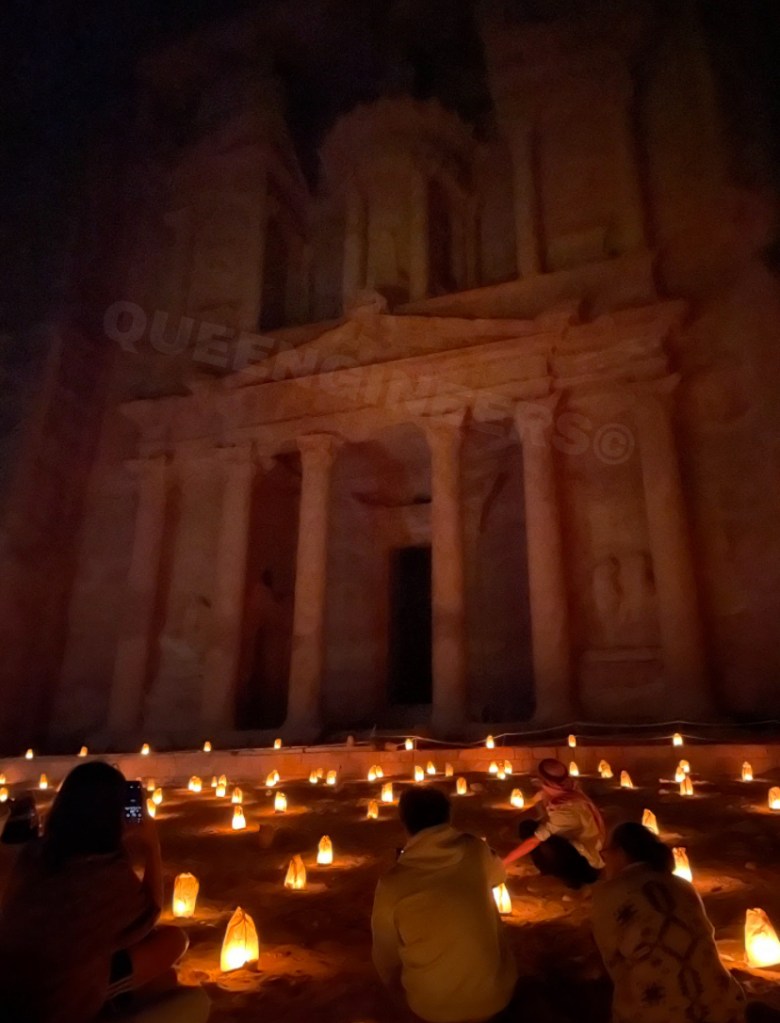
As a part of our travels, we had the opportunity to explore Petra over the span of three days. The first instance where I saw Petra was on the Petra by Night tour, where the UNESCO New Wonder of the World is lit up and admired by tourists with music and tea every night(see my picture above).However, the second and third instance we arrived early in the morning at around 6 o’clock and seeing it in the daylight was even more breath-taking.
Petra was built by the Nabataeans, a civilisation which I am inspired by.
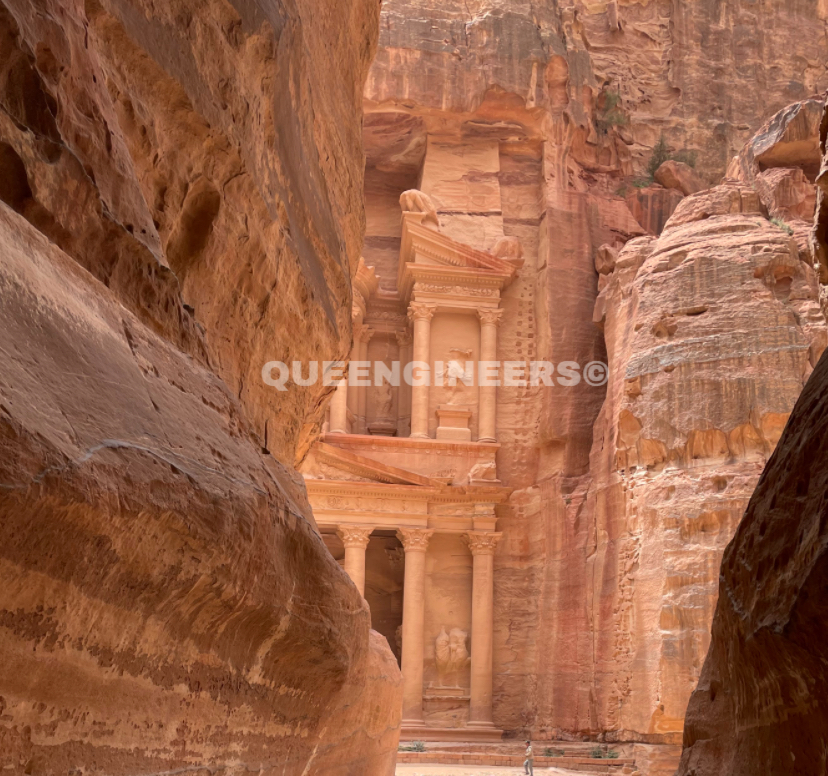
The Nabataeans are an inspiration for architecture. Through mathematics and geometry, they have carved Petra at a hidden location where intruders cannot locate the city until a few metres away, in between a rock formation(pictured below).Not only this but the entire city of Petra was carved onto the sandstone cliffs, with hammers, chisels, bronze, and iron fixings. These Nabataean engineers took the local resources available to them and used them to protect the lives of workers and create a safe, fortified environment. Similarly, as engineers of the present, we must learn to use the environment we find around us like astronautical engineers are investigating resources on Mars for long-term space exploration through a process called In-Situ Resource Utilisation (ISRU).
The Nabataeans also created sophisticated water systems with underground water cisterns that could collect rainwater and this along with water from springs was then piped into clay aqueducts on both sides of the siq,bringing water to the city of Petra.The accuracy of the hydraulic engineering is truly exceptional because of the slope of the pipelines running at an angle of under 3 degrees,allowing for maximum flow rate.This means that Nabataeans were ahead of their time in terms of geometry,architecture and civil and structural engineering altogether.
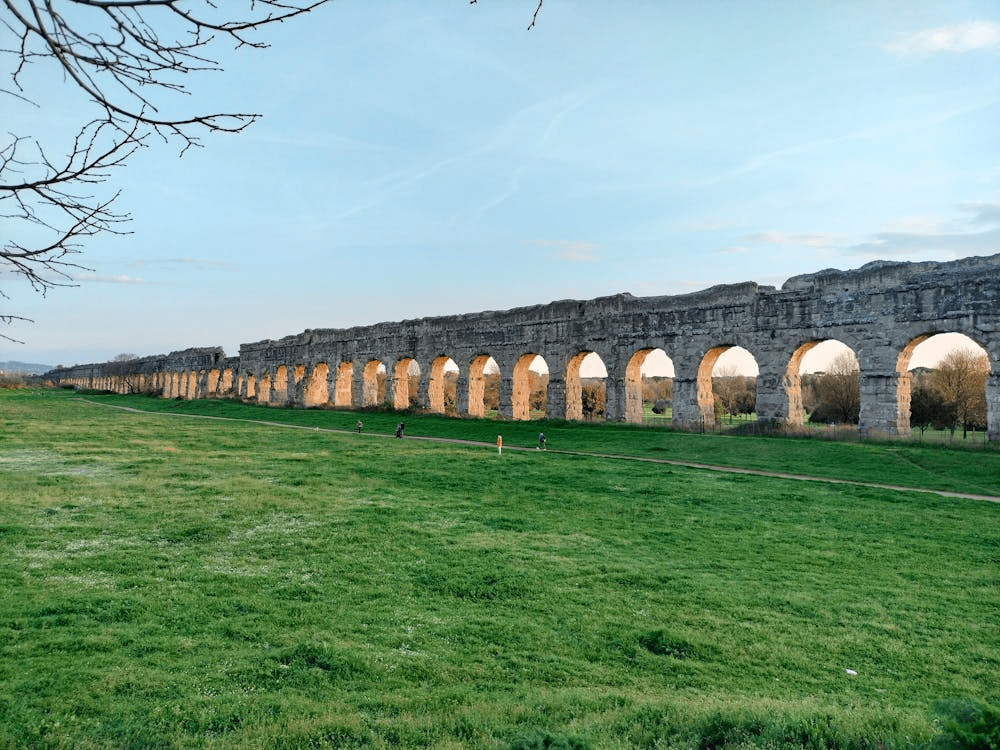
Similarly, the ancient engineers of Roman civilisation created a intricate 250 mile aqueduct system, which transported water using no mechanical assistance and just gravity.Taking advantage of the natural slope of the land (an environmental theme we came across earlier) and gravity, the Romans built their aqueducts with a slightly downward slope. The aqueducts were built with concrete, brick or stone and water could then easily flow into the cities for drinking,irrigation and the communal baths.
Moving onto our next civilisation of engineers, meet the Incas…
An empire renowned for their 40,000 kilometre long road network ( Qhapaq Ñan),their geometric stonework in places like Machu Picchu and Sacsayhuaman and artistic textiles.
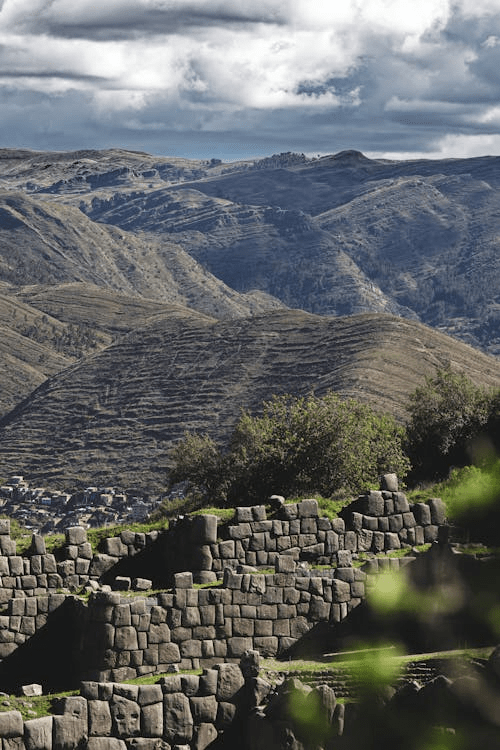
To begin with, let’s take a look at this image.This is the Sacsayhuaman fortress, which I visited in April 2015.The complex design we can see is in the shape of a puma’s head,a sacred animal for the Incas.The Sapa Inca (king) at the time, Pachacuti decided to redesign the city of Cuzco to give it the shape of a lying puma,having this fortress at its head. You may be able to see that the stones were carved and fitted at such precise angles that they were laid on top of eachother without the need for mortar.These are known as ‘dancing stones’, as they are built to withstand earthquakes, by appearing to dance up and down and fall back in their original place.
But how did the Incas move the rocks onto the location? The Incas never used the wheel so instead of this, they had a team of 4,000 labourers who quarried the stones,placed them on logs and pulled these with rope towards the construction site.This is the most likely reason as to why it took the Incas 77 years to build Sacsayhuaman.
Along the outside of Sacsayhuaman are extensive road networks (Qhapaq Ñan),leading all the way from Columbia to Peru to Chile. The Qhapaq Ñan played a significant role as it connected along the Incan Empire.This led to better opportunities in facilitating communication,trade and military mobilisation.The reason why I find this fascinating is how the Qhapaq Ñan facilitated communication with a chaski relay system. This is where a network of messengers carried messages or parcels across the Empire.
Imagine you are a chaski (messenger) and have been given a long message from the Sapa Inca (King) for a distant Empire.You would need to carry this message in a quipu(a knotted string instrument used to record information). You must now run 150 kilometres in the direction of the message towards the chaskiwasi.Here, exchange the quipu with the next chaski who will run the next lap and so on and so forth until the receiving of the message.
We can learn from the efficiency and intelligence of the Incas as this system together with the Qhapaq Ñan allowed messages to be sent in a matter of days rather than weeks.
Last but certainly not least, let us end this journey with another amazing engineering civilisation:the Egyptians!!
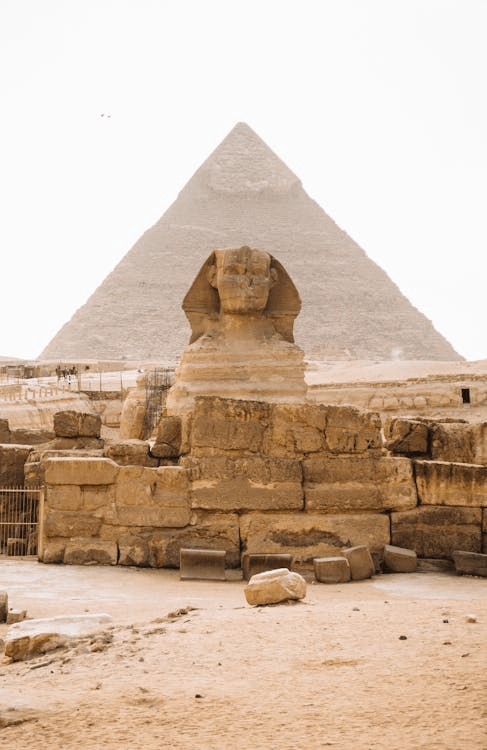
The ancient Egyptians were masters of engineering and their monumental landmarks stand as a testament to their ingenuity.From the Great Pyramids of Giza to the temple of Luxor, they demonstrated innovation with their intricate architecture.The Egyptians’ knowledge of geometry was significant within their construction of the Great Pyramids of Giza as they were aligned exactly with the cardinal points(four main compass directions).With geometry combined with their probable use of their environment, studies indicate that the Egyptians utilised the Sun,pole star and autumnal equinox for accurate measurement.
They also mastered the art of mummification, creating a highly technical and spiritual process with chemistry and craftsmanship for preservation of corpses.
My personal favourite Egyptian engineering feat is their irrigation systems. ‘Irrigation systems’ are ‘systems whereby water is delivered to plants via a man-made medium’. The Egyptian’s location was in the desert (just like the Nabataeans) which was dry and arid.The Nile, the longest river in Africa, also flows through Egypt and every year, it would get flooded. Through observational learning,the Egyptians understood that they could harness this flooding,create a system of canals,basins and reservoirs, which could then be transported to irrigate vast areas of land. This enhanced the practice of agriculture and now the Egyptians could enjoy wheat,vegetables and fruit from their own land.
As we marvel at the remarkable engineering feats of lost civilisations, we are reminded that the principles of innovation, resourcefulness, and precision transcend time. Ancient engineers, whether in Egypt, Rome, Jordan, or Peru understood the age-old lessons that a thorough awareness of nature and geometry/mathematics are a powerful combination in the creation of long-lasting solutions (like these civilisations’ monuments which have stood the test of time).
This voyage has brought together some of my greatest passions: civil engineering, history, and travel destinations. I hope you have enjoyed this exploration as much as I have and together, as a community, let’s remember to honour their wisdom and keep learning from it.
Thank you for joining me on this voyage through history, Queengineers and I look forward to our next one!
 queengineers.co.uk
Leave a comment